
Friction is a Feature, Not a Bug: A Guide to Collective Intelligence
%20IMG_7546.jpg?width=50&name=HELEN%20HORN%20(square%20mid%20res)%20IMG_7546.jpg)
In a time where unpredictability and chaos seem to prevail in the economic and geopolitical context, many leaders naturally act to keep the peace and reduce tension within their team.
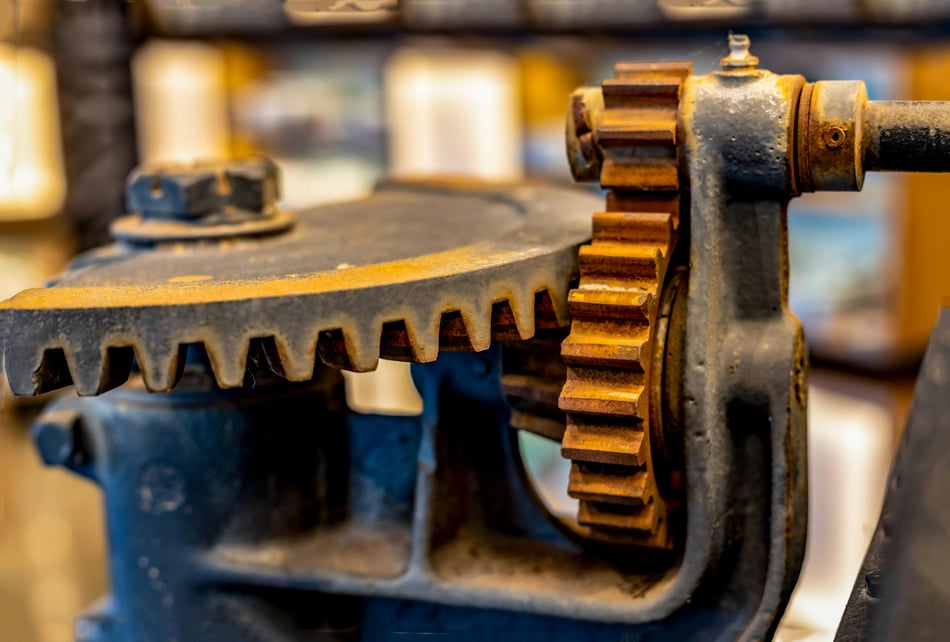
That’s something that seems more in their control than the context they operate within. However, over-playing ‘peace’ within teams risks being counterproductive. High performing teams are not built on the absence of friction, rather the careful calibration of it.
Friction in the team raises the temperature in the ‘room’ and that’s often experienced as a 'malfunction’; a sign of a broken culture that needs to be fixed.
The challenge is that if you remove all friction from a system, you don’t typically get harmony; you get inertia and perpetuation of the status quo.
In the pursuit of performance and collective intelligence, leaders must move beyond simply keeping the peace. Their role is not to eliminate tension, but to calibrate it, knowing when to increase the heat to provoke new thinking, and when to lower it to maintain trust, focus, and cohesion.
I’ve worked with executive teams where the start state is that the team gets on really well, meetings feel great, and they enjoy being together, but hard conversations are avoided and collective performance is compromised. In one instance, the organisation was performing well, but largely because the tier three leaders were good at ‘leading around’ the Executive Team. Energy was wasted.
Using Energy Well
Productive tension consumes energy. Effective leaders recognise that a team’s cognitive and emotional capacity is finite, and that sustained high heat without recovery eventually degrades judgement, trust, and performance.
People tend to overestimate capacity and underestimate risk, and this tendency is often amplified in leaders. Leadership success typically requires drive, optimism, and the ability to align others around an ambitious vision. Yet many senior leaders struggle to accept that both their own energy and their team’s capacity are finite resources. Even when they recognise this, they often find it difficult to make the hard decisions required to manage energy sustainably.
High-performing teams are fueled by a specific kind of energy; productive tension. Too little friction leads to complacency and avoidance; too much creates defensiveness, fatigue and fragmentation. The leadership challenge is to calibrate the heat - creating an environment where robust debate, diverse thinking, and challenge can coexist with trust and psychological safety. When leaders get this balance right, friction becomes a catalyst for collective intelligence rather than a source of dysfunction.
Effective leaders actively regulate the level of tension within the system. Sometimes this means increasing the heat to surface difficult realities; at other times it means reducing pressure so the team can recover, refocus, and continue engaging constructively. Heifetz and Linsky (2002) describe effective ways to dial up, and dial down, ‘the heat’.
Dialling Up the Heat
- Shine a light on the tough questions.
- Increase responsibility, give people and the team more than they are comfortable with; promote learning.
- Dig below the surface of conflicts.
- Enable dissent and diverse views.
- Manage the technical aspects of the problem.
- Use structure to enable the problem-solving process, e.g., role clarity, decision rules.
- As the leader, be responsible for tough issues for a period of time.
- Shift expectations away from tough issues for a period of time.
- Slow the pace of challenge and moderate expectations.
Signal vs Noise
Teams today operate in complex, ambiguous, rapidly changing environments that can test the best leaders and teams. The challenge for leaders is not simply tolerating heat, but distinguishing productive tension from destructive reactivity. In a heated meeting, the noise is the ego, the raised voices, and the defensive posturing.

The signal is the underlying insight that challenges the status quo. To identify the signal within the noise, an effective leader needs to shift from being the ‘heroic decider' to a synthesiser. This means listening not for who is winning the argument, but for how conflicting viewpoints can be synthesised into stronger thinking.
The Vulnerability Paradox
To turn friction into intelligence, effective leaders are the first to admit they don’t have the answer. This is the Vulnerability Paradox (Brown, 2018): by appearing less certain, leaders actually lower the defensive friction of the entire room. When leaders stop needing to be right, teams will feel safe enough to be ‘smart’, or to offer the ideas that are high risk that may come with high reward. While this is true in almost any context, it is particularly true in contexts where the situation is complex; when cause and effect are unclear, the solution requires multi-disciplinary inputs and experimentation to be successful (Snowden & Boone (2007).
Calibrating to Fulfill Potential
Converting collective friction into energy requires the right tools to enable the team to fulfil its potential. The good news is that there is a science for enabling leaders to build a roadmap to create high performing teams. This includes creating strong foundations by creating a shared understanding of (Curphy, Nilsen, & Hogan, 2019):
-
- Context. The situation around the team.
- Mission. What success looks like and the unique value of the team.
- Talent. Role clarity and the right skills and capacity.
- Norms. The agreed behaviours that enable performance.
- Buy-In. Team first rather than individual first.
- Resources. The resources required to meet goals.
- Courage. Calibrating conflict.
- Results. Focussed, measured progress and results.
Once the team has a shared mental model of the unique value they add together, then surfacing individual and collective potential through personality profiles can be invaluable:
- What are the individual strengths and behaviours that may create friction when under pressure?
- What do different team members value and how does that shape what they prioritise?
- What are the teams' shared unconscious biases, how similar or different are they?
- How are aligned or differentiated profiles across the team? How does that help or hinder the optimal calibration of friction?
For example, when team members understand that one person’s ‘aggressive’ debate style is simply their DNA for problem-solving, and another’s silence is actually deep processing, they can calibrate the conversation to ensure everyone’s signal is heard. In other words, to harness the required friction to ensure diversity of thinking and generate innovation.
Leading the Calibration
Leaders are not simply managing people, they are shaping the conditions under which insight, challenge and innovation can thrive.
Don’t fear the heat, calibrate it.
Collective intelligence does not emerge despite friction. It emerges because of it — when leaders know how to calibrate the heat.
References:
Brown, B. (2018). Dare to lead: Brave Work. Tough Conversations. Whole Hearts. Random House.
Curphy, G., Nilsen, D., & Hogan, R. Ignition: A Guide to Building High-Performing Teams.
Heifetz, R.A. & Linsky, M. (2002). Leadership on the Line: Staying Alive Through the Challenges of Leading. Harvard Business Press.
Hill, L.A, Brandeau, G,. Truelove, E., and Lineback, K. (June 2014). Collective Genius. Harvard Business Review.
Snowden, D. and Boone, M.E. (2007). A Leader’s Guide for Decision-making. Harvard Business review.


Image credit: Edwen Lopez, Unsplash
Need more information? Contact the Winsborough Team:
winsborough.co.nz | 0800 222 061 | support@winsborough.co.nz